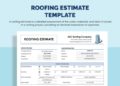
Delving into Roof Estimate Breakdown: Understanding Labor, Materials & Warranty, this introduction immerses readers in a unique and compelling narrative, with a casual formal language style that is both engaging and thought-provoking from the very first sentence.
Exploring the intricacies of roof estimates involves understanding the key components that contribute to the overall cost, including labor, materials, and warranties. This comprehensive breakdown sheds light on how each element impacts the final estimate, providing valuable insights for homeowners and contractors alike.
Understanding Roof Estimates
When it comes to getting a roof estimate, it's essential to understand the different components that make up the total cost. This includes labor, materials, and any warranties that may be included. Let's break down these elements further to help you make informed decisions.
Components of a Typical Roof Estimate
- Labor Costs: Labor costs are a significant part of any roof estimate and are typically calculated based on the size of the roof, the complexity of the job, and the time required to complete the project.
- Materials: The type and quality of materials used will also impact the overall cost of the estimate. From shingles to underlayment, each material plays a crucial role in the durability and longevity of your roof.
- Warranty: Some roof estimates may include warranties for both labor and materials, providing you with peace of mind and protection against any unforeseen issues.
Calculating Labor Costs in a Roof Estimate
- Labor costs are typically calculated based on the square footage of the roof that needs to be worked on. Contractors may also take into account the pitch of the roof, accessibility, and any additional services required, such as removing old roofing materials.
- Factors such as the experience and expertise of the roofing crew, prevailing wage rates in the area, and the time required to complete the project will all influence the final labor costs in the estimate.
Role of Materials in Determining the Overall Cost
- The type of materials chosen for the roof, whether it's asphalt shingles, metal, tile, or slate, will have a direct impact on the overall cost of the estimate. Higher quality materials will typically come at a higher price but may offer better durability and aesthetics.
- In addition to the type of materials, the quantity needed to cover the entire roof area will also be factored into the estimate. This includes any additional materials like underlayment, flashing, and ventilation components.
Labor Breakdown
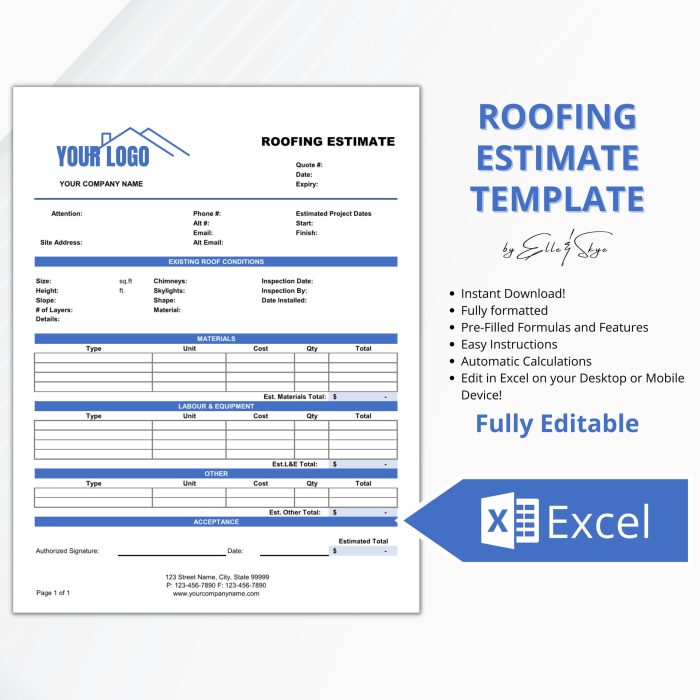
When it comes to roofing projects, labor is a significant component that can greatly impact the overall cost. Understanding the different types of labor involved, how costs can vary based on complexity, and the factors that influence labor costs is essential for a comprehensive roof estimate.
Types of Labor Involved
- Roofing Installation Crew: This team is responsible for the actual installation of the roofing materials onto the structure.
- Carpenters: They handle any woodwork or structural repairs that may be required before the roofing installation.
- Skylight Installers: If skylights are part of the project, specialized labor is needed for their installation.
Factors Affecting Labor Costs
- Roof Complexity: The more complex the roof design, the more skilled labor may be required, impacting costs.
- Roof Size: Larger roofs require more labor hours, which can increase labor costs.
- Accessibility: If the roof is difficult to access or requires special equipment, labor costs may be higher.
- Weather Conditions: Inclement weather can slow down work, potentially extending labor hours and increasing costs.
- Demolition and Cleanup: Labor for removing old materials and cleaning up the site after installation adds to the total labor costs.
Materials Breakdown
Roofing materials play a crucial role in determining the overall cost and quality of a roof estimate. Understanding the different types of materials used in estimates is essential for making informed decisions when it comes to your roofing project.When comparing the cost differences between different roofing materials, it's important to consider not just the initial price but also the long-term value they provide.
Cheaper materials may save you money upfront but could end up costing more in repairs and replacements down the line. On the other hand, investing in high-quality materials can result in a more durable and long-lasting roof that requires less maintenance.
Types of Roofing Materials
- Asphalt Shingles: Asphalt shingles are one of the most popular and affordable roofing materials. They come in various colors and styles, making them versatile for different aesthetic preferences.
- Metal Roofing: Metal roofing is known for its durability and longevity. While it may have a higher upfront cost, it can last for several decades with minimal maintenance.
- Wood Shingles/Shakes: Wood shingles and shakes offer a natural and rustic look to a roof. However, they require more upkeep and are susceptible to rot and pests.
- Tile Roofing: Tile roofing is durable and fire-resistant, making it a popular choice in areas prone to wildfires. It can be more expensive but has a long lifespan.
Quality Impact on Price
It's important to note that the quality of roofing materials directly impacts the overall price of a roof estimate. Higher quality materials generally come with a higher price tag but offer better durability and performance. Cheaper materials may save you money initially, but they may not withstand harsh weather conditions or last as long as premium options.
When considering materials for your roof, it's essential to strike a balance between cost and quality to ensure a roof that meets your needs and budget in the long run.
Warranty Considerations
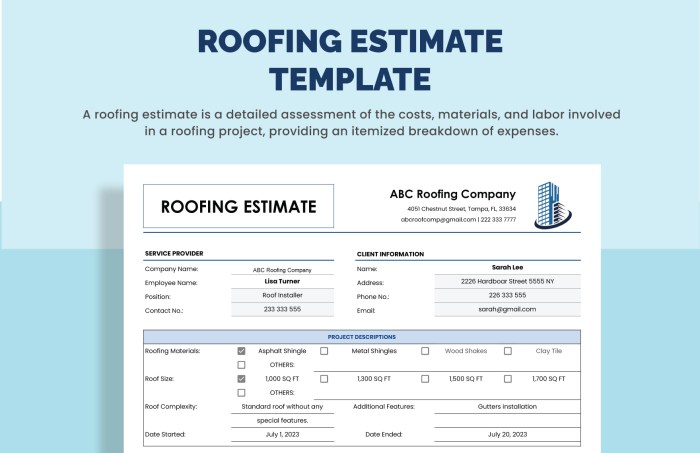
When it comes to roof estimates, warranties play a crucial role in ensuring peace of mind for homeowners. Understanding the different types of warranties offered and how they can impact the overall cost of a roof estimate is essential.Explainatory paragraph:Warranties are guarantees provided by roofing contractors or manufacturers to cover any potential defects or issues that may arise with the roof installation or materials used.
They vary in terms of coverage, duration, and what is included, so it's important to carefully review and compare warranties before making a decision.
Types of Warranties
- Manufacturer's Warranty: Typically covers defects in the roofing materials and is provided by the manufacturer. This warranty can range from 20 to 50 years, depending on the type of material.
- Workmanship Warranty: Offered by the roofing contractor, this warranty covers any installation errors or issues that may arise due to poor workmanship. It usually lasts for 1 to 10 years.
- Extended Warranty: Some contractors may offer extended warranties for an additional cost, providing longer coverage for both materials and workmanship.
Impact on Roof Estimate
Warranties can affect the overall cost of a roof estimate by adding value and peace of mind to the homeowner. Contractors who offer comprehensive warranties may have slightly higher estimates, but the added protection can be worth the investment in the long run.
It's essential to consider the warranty terms, coverage, and duration when comparing different roof estimates to make an informed decision.
Final Wrap-Up
In conclusion, grasping the nuances of labor, materials, and warranties in a roof estimate is essential for making informed decisions about roofing projects. By understanding how these factors influence costs, individuals can navigate the estimation process with confidence and clarity, ensuring successful outcomes for their roofing endeavors.
Top FAQs
What factors can affect labor costs in a roof estimate?
Labor costs in a roof estimate can be influenced by factors such as the size of the roofing project, the complexity of the job, and the experience level of the roofing crew.
How do warranties impact the overall cost of a roof estimate?
Warranties can affect the overall cost of a roof estimate by offering varying levels of coverage and protection, which may influence the initial cost of the project.
What are the different types of roofing materials commonly used in estimates?
Common roofing materials used in estimates include asphalt shingles, metal roofing, tile roofing, and wood shakes.